Build a software startup without writing code.
A proven team workflow, run by AI agents. You make the decisions.
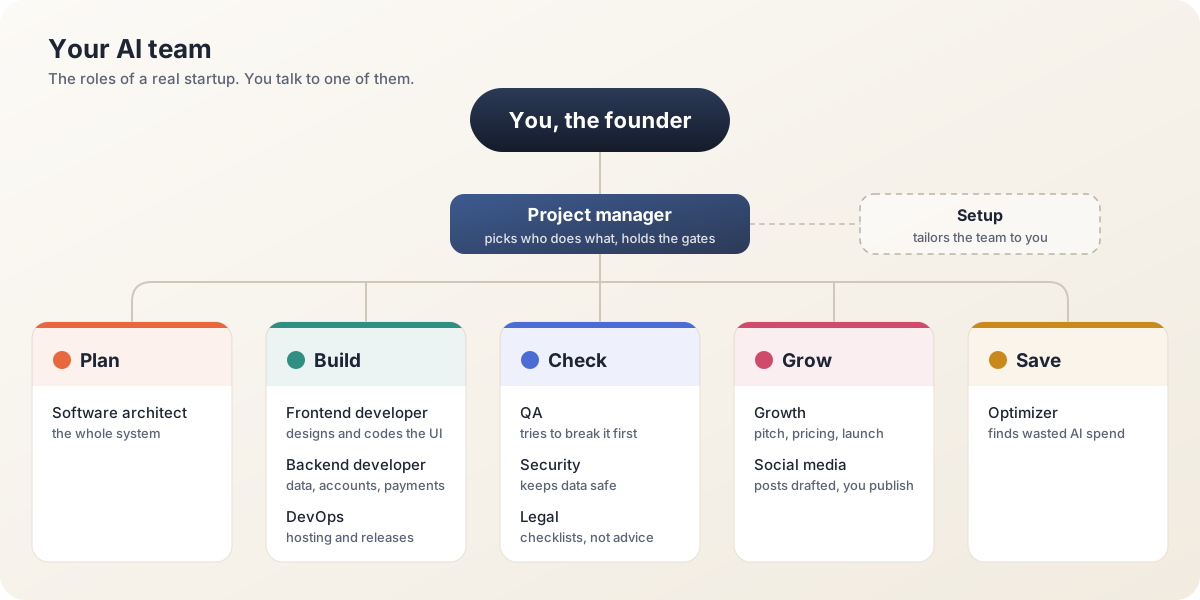
A free template that gives you the first hires of a startup as AI agents: a project manager, an architect, developers, a tester, security, legal, growth and social media. They plan, build, test and launch with you, and nothing goes live without your yes.
github.com/Fadi88/one-man-startupMade for Claude Code, Codex, Gemini CLI and Cursor. MIT licence.
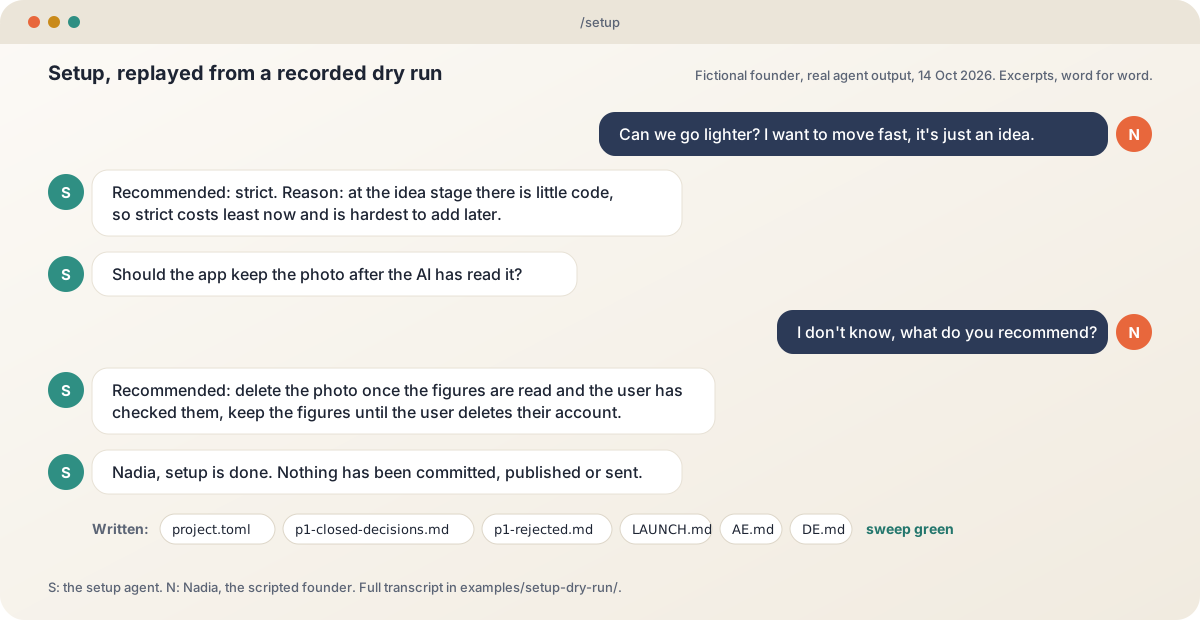
Replayed word for word from a recorded dry run with a fictional founder.
This is not vibe coding
Vibe coding
Describe what you want, accept whatever the AI writes, ask again when something breaks. Fast for a demo. It tends to end in an app that half works, that nobody understands, and that gets more fragile with every fix.
This template
The structure established software teams use: written down before it is built, designed before it is coded, tested by someone other than whoever built it, and released only when you approve. The agents fill the roles; the workflow is the traditional one.
| What happens here | The established practice |
|---|---|
| Before anything is built, you are interviewed about who needs it, the smallest useful version and what happens when it goes wrong. | Requirements elicitation |
| Everything the product must do is a numbered requirement, and every change names the requirement it serves. | Requirements traceability |
| Building can't start until the spec is confirmed and no question on it is still open. | Definition of Ready |
| An architect designs the system and records each hard-to-reverse choice with its reason. | Architecture Decision Records |
| Developers write the test before the code. | Test-driven development |
| A separate tester checks the work against the requirements and can stop a release. | Independent QA |
| A security reviewer looks for ways data could leak or be misused. | Threat modelling |
| Every change re-runs every check, and a round ends only when they all pass. | Continuous integration |
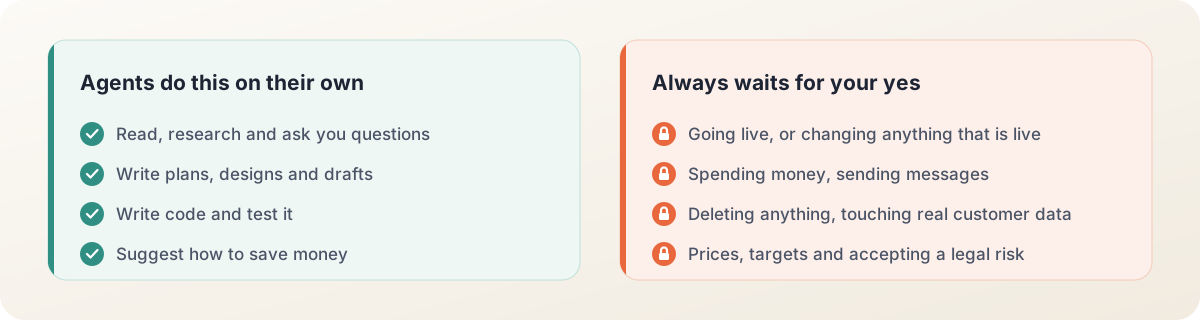
| Nothing goes live, costs money or deletes data without your approval, one step at a time. | Release approval |
| Decisions, and the ideas you turned down, are written down with the reason. | Decision log |
What changes is who does the work, not how it is done.
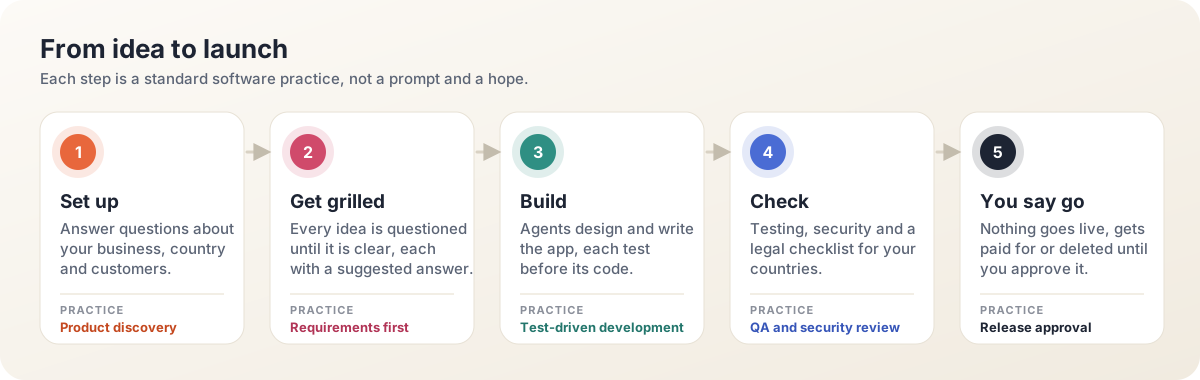
From idea to launch
Your AI team
You talk to one agent, the project manager. It brings in the others when they're needed.
What stays in your hands
How it's built
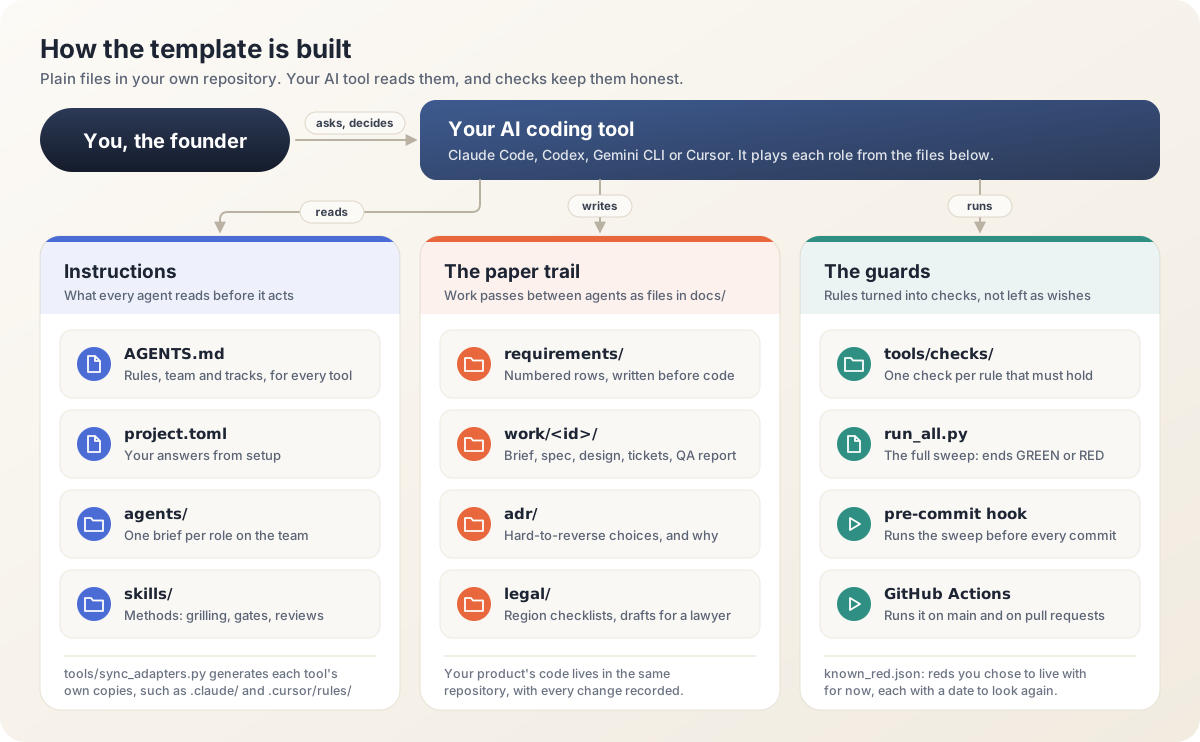
Plain files in your own GitHub repository. Nothing is locked into this template or any one AI tool.
Getting started
- Install your AI coding tool, then ask it to check that Git and Python 3.11 or newer are installed.
- Click Use this template and name the repository after your product.
- Open your copy in your AI tool.
- Type
/setupin Claude Code, or ask any tool to run the setup interview fromskills/setup. - Ask for your first thing, for example a landing page with a waiting list.
The agents still make mistakes, and the tests and approvals won't catch all of them. The legal agent writes checklists and drafts for a lawyer, not legal advice. Support for Codex, Gemini CLI and Cursor is written but not yet tested; see what has been tested.